Gresham House
Specialist asset management
Turning renewable volatility into resilient returns
Turning renewable volatility into resilient returns
Institutional portfolios have diversified well beyond equities and bonds, and infrastructure now sits within most allocations – but within energy infrastructure, capital has concentrated on renewable generation. That model is now under huge pressure.
Wind and solar reached a record 27% of EU electricity in 2023 and are targeted to reach 55% by 2030; because they generate at the same time, they increasingly depress prices when they produce, and across Europe there were, in aggregate, more than 9,000 hours of negative power prices in 2025. Renewable capture prices are eroding. At the same time, as synchronous thermal generation, such as coal- and gas-fired power plants, retires and variable renewables expand, the system needs new sources of fast-response flexibility, frequency support and other grid services – the gap BESS fills.
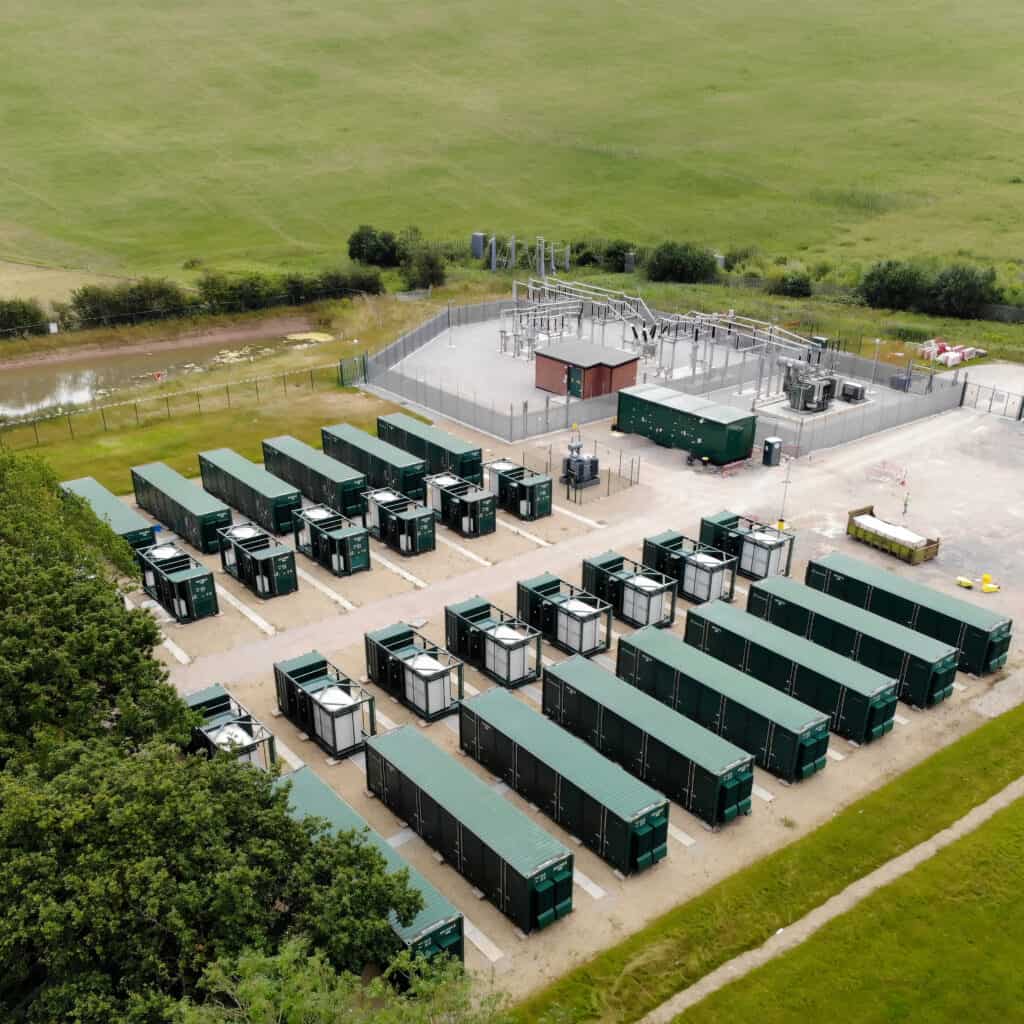
Battery energy storage systems (BESS) earn from the other side of that equation – volatility, scarcity and flexibility rather than generation volume.
In brief:
- The asset class:
Battery energy storage systems (BESS) is a proven technology within energy infrastructure: a real asset, essential to the grid, and increasingly attracting infrastructure-style capital and financing - The investment opportunity:
Demonstrable issues with grid stability and rising balancing costs, combined with declining renewable capture prices on generation assets, create the investment case for BESS. European grid-scale storage is forecast to grow from around 17 GW in 2025 to roughly 84 GW by 2030, requiring more than €50bn of investment; global capacity rises around ninefold to over 4 TW by 2040 - Contracted revenue visibility:
Contract structures vary by market, but projects can typically secure long-term floors, tolls, capacity payments or other government-backed revenue support. This provides downside mitigation against geopolitical and technology risk while preserving upside from the price volatility and flexibility that set storage apart from renewable generation - The allocation:
A dedicated allocation to BESS allows investors to access flexibility across the whole market differing to adding batteries to existing renewables, where location, grid connection and operating profile constrain the value that can be captured - The sustainability contribution:
BESS enables greater renewable integration, reduces curtailment and supports a more flexible and resilient electricity system. Gresham House directs capital towards areas of greatest system need while managing supply-chain, safety, community and end-of-life impacts across the asset lifecycle - The manager:
Gresham House is Europe’s largest BESS operator and a leader on driving policy and innovation in the sector, with more than 1 GW of operating capacity under management and 10 years of operating experience
Media enquiries
KL Communications – gh@kl-communications.com
40 Queen Street, London EC4R 1DD
+44 (0) 20 3995 6671
www.kl-communications.com