

Gresham House Global Thematic Multi-Asset Fund
The Gresham House Global Thematic Multi-Asset Fund is an actively managed diversified fund with a socially responsible focus. It invests in a comprehensive range of traditional and alternative asset classes, including Equities, Fixed Income, Real Estate, Infrastructure, Venture Capital, Commodities, Forestry and Currencies, spread over various geographies and sectors.
Sustainability risks are integrated as part of the decision-making process and a dynamic asset allocation process is used that seeks to ensure that risk and variations in value are reduced. The fund has a long-term track record of positive risk-adjusted returns with lower volatility.
The Fund follows a similar investment strategy to the Gresham House Global Multi-Asset Fund, but differentiates itself through its ethical focus.
Stocks are subject to an ethical screen and the Fund avoids those companies in conflict with global ESG norms. Therefore, the investment universe is more limited.
Investors in the Gresham House Global Thematic Multi-Asset Fund have the potential to benefit from:
Diversification: The Fund provides a wide exposure to different asset classes, which reduces the volatility of the aggregated return.
Active asset allocation: With an emphasis on the value and quality of the assets, we strive to produce positive returns by maintaining appropriate levels of exposure to the relevant asset class at suitable points in the economic and business cycle.
Key documents
- Quarterly report – Q2 2026
- Annual Report 30 September 2025
- Gresham House Ireland Fund Range Brochure
- Gresham House Unit Trust Prospectus
- Supplement Prospectus – Gresham House Global Thematic Multi-Asset Fund
- Intermediary Application
- Entity Investor via Intermediary Application
- Individual Investor via Intermediary Application
- Factsheet – October 2026
Our process
We follow a disciplined investment process to achieve the investment objectives for our investors.
- Our team conducts fundamental analysis of each security considered for portfolio selection.
- We seek three key drivers as an indication of an asset’s quality: the ability to generate cashflow, the strength of its balance sheet and its ability to demonstrate profitable growth.
- We analyse the risk and opportunity profile of various asset classes to determine the portfolio’s construction
- A key part of our the way we invest is focused on avoiding risk. We have integrated this into our process. For each security we consider the risk associated with sustainability factors, the quality of the asset and the valuation it carries.

Fund performance
Past performance is not a guide to future performance. Capital at risk.
Fund return
| Period | 2026 | 2025 | 2024 | 2023 | 2022 | 2021 | 2020 | 2019 | 2018 | 2017 | 2016 | 2015 |
|---|---|---|---|---|---|---|---|---|---|---|---|---|
| Fund return* | 12.09% | 5.35% | 7.15% | 4.37% | -8.35% | 17.22% | 6.74% | 14.46% | -4.48% | 1.86% | 1.93% | -2.43% |
Close of business mid-market prices
| Close of business mid-market prices | Deal Date | Dealing Price € |
|---|---|---|
| 31/10/2026 | 01/11/2026 | 167.7272 |
| 30/09/2026 | 01/10/2026 | 163.8748 |
| 31/08/2026 | 01/09/2026 | 167.8665 |
| 31/07/2026 | 01/08/2026 | 164.9689 |
| 30/06/2026 | 01/07/2026 | 165.3737 |
| 31/05/2026 | 01/06/2026 | 163.7385 |
| 30/04/2026 | 01/05/2026 | 160.4634 |
| 31/03/2026 | 01/04/2026 | 153.3137 |
| 28/02/2026 | 01/03/2026 | 161.5287 |
| 31/01/2026 | 01/02/2026 | 154.5020 |
| 31/12/2025 | 01/01/2026 | 149.6331 |
| 30/11/2025 | 01/12/2025 | 147.6196 |
| 31/10/2025 | 01/11/2025 | 147.2821 |
| 30/09/2025 | 01/10/2025 | 146.2990 |
| 31/08/2025 | 01/09/2025 | 147.1101 |
| 31/07/2025 | 01/08/2025 | 146.9518 |
| 30/06/2025 | 01/07/2025 | 144.4986 |
| 31/05/2025 | 01/06/2025 | 144.3532 |
| 30/04/2025 | 01/05/2025 | 140.7196 |
| 31/03/2025 | 01/04/2025 | 141.6538 |
| 29/02/2025 | 01/03/2025 | 144.0421 |
| 31/01/2025 | 01/02/2025 | 144.1180 |
| 31/12/2024 | 01/01/2025 | 142.0339 |
| 30/11/2024 | 01/12/2024 | 144.0340 |
| 31/10/2024 | 01/11/2024 | 142.4925 |
| 30/09/2024 | 01/10/2024 | 143.5376 |
| 31/08/2024 | 01/09/2024 | 140.4164 |
| 31/07/2024 | 01/08/2024 | 141.5856 |
| 30/06/2024 | 01/07/2024 | 136.3279 |
| 31/05/2024 | 01/06/2024 | 139.2510 |
| 30/04/2024 | 01/05/2024 | 133.9608 |
| 31/03/2024 | 01/04/2024 | 135.6564 |
| 29/02/2024 | 01/03/2024 | 131.0288 |
| 31/01/2024 | 01/02/2024 | 131.2532 |
| 31/12/2023 | 01/01/2024 | 132.5509 |
| 30/11/2023 | 01/12/2023 | 126.9746 |
| 31/10/2023 | 01/11/2023 | 120.2942 |
| 30/09/2023 | 01/10/2023 | 126.7378 |
| 31/08/2023 | 01/09/2023 | 130.0249 |
| 31/07/2023 | 01/08/2023 | 131.5933 |
| 30/06/2023 | 01/07/2023 | 129.5138 |
| 31/05/2023 | 01/06/2023 | 128.9029 |
| 30/04/2023 | 01/05/2023 | 131.9407 |
| 31/03/2023 | 01/04/2023 | 132.6859 |
| 28/02/2023 | 01/03/2023 | 136.6672 |
| 31/01/2023 | 01/02/2023 | 134.2986 |
| 31/12/2022 | 01/01/2023 | 127.0007 |
| 30/11/2022 | 01/12/2022 | 130.9351 |
| 31/10/2022 | 01/11/2022 | 128.7774 |
| 30/09/2022 | 01/10/2022 | 122.9133 |
| 31/08/2022 | 01/09/2022 | 133.3939 |
| 31/07/2022 | 01/08/2022 | 136.9902 |
| 30/06/2022 | 01/07/2022 | 129.4374 |
| 31/05/2022 | 01/06/2022 | 137.0234 |
| 30/04/2022 | 01/05/2022 | 140.3650 |
| 31/03/2022 | 01/04/2022 | 139.6421 |
| 28/02/2022 | 01/03/2022 | 136.1057 |
| 31/01/2022 | 01/02/2022 | 136.5485 |
| 31/12/2021 | 01/01/2022 | 138.5754 |
| 30/11/2021 | 01/12/2021 | 132.7031 |
| 29/10/2021 | 01/11/2021 | 137.1287 |
| 30/09/2021 | 01/10/2021 | 131.6478 |
| 31/08/2021 | 01/09/2021 | 134.7641 |
| 30/07/2021 | 03/08/2021 | 133.5442 |
| 30/06/2021 | 01/07/2021 | 130.8747 |
| 31/05/2021 | 01/06/2021 | 131.3781 |
| 30/04/2021 | 01/05/2021 | 127.9472 |
| 31/03/2021 | 01/04/2021 | 126.5800 |
| 26/02/2021 | 01/03/2021 | 121.9934 |
| 29/01/2021 | 01/02/2021 | 118.9285 |
| 31/12/2020 | 04/01/2021 | 118.2203 |
| 30/11/2020 | 01/12/2020 | 114.4186 |
| 30/10/2020 | 02/11/2020 | 106.2492 |
| 30/09/2020 | 01/10/2020 | 107.9432 |
| 31/08/2020 | 01/09/2020 | 107.2796 |
| 31/07/2020 | 04/08/2020 | 103.6997 |
| 30/06/2020 | 01/07/2020 | 102.4709 |
| 31/05/2020 | 02/06/2020 | 103.0517 |
| 30/04/2020 | 01/05/2020 | 100.4763 |
| 31/03/2020 | 01/04/2020 | 93.2481 |
| 28/02/2020 | 02/03/2020 | 104.1408 |
| 31/01/2020 | 03/02/2020 | 108.6331 |
| 31/12/2019 | 02/01/2020 | 110.7539 |
| 30/11/2019 | 02/12/2019 | 108.5602 |
| 31/10/2019 | 01/11/2019 | 106.1562 |
| 30/09/2019 | 01/10/2019 | 104.8950 |
| 30/08/2019 | 02/09/2019 | 102.6139 |
| 31/07/2019 | 01/08/2019 | 104.3679 |
| 28/06/2019 | 01/07/2019 | 104.5224 |
| 31/05/2019 | 04/06/2019 | 102.4940 |
| 30/04/2019 | 01/05/2019 | 106.7369 |
| 29/03/2019 | 01/04/2019 | 104.4960 |
| 28/02/2019 | 01/03/2019 | 104.2016 |
| 31/01/2019 | 01/02/2019 | 101.5180 |
| 31/12/2018 | 02/01/2019 | 96.7642 |
| 30/11/2018 | 03/12/2018 | 101.0732 |
| 31/10/2018 | 01/11/2018 | 101.2560 |
| 28/09/2018 | 01/10/2018 | 103.1678 |
| 31/08/2018 | 03/09/2018 | 102.8722 |
| 31/07/2018 | 01/08/2018 | 103.5996 |
| 29/06/2018 | 02/07/2018 | 102.1571 |
| 31/05/2018 | 01/06/2018 | 101.8900 |
| 30/04/2018 | 01/05/2018 | 100.7902 |
| 29/03/2018 | 03/04/2018 | 98.6876 |
| 28/02/2018 | 01/03/2018 | 100.2820 |
| 31/01/2018 | 01/02/2018 | 101.9015 |
| 29/12/2017 | 02/01/2018 | 101.3017 |
| 30/11/2017 | 01/12/2017 | 99.8946 |
| 31/10/2017 | 01/11/2017 | 101.2479 |
| 29/09/2017 | 02/10/2017 | 99.9150 |
| 31/08/2017 | 01/09/2017 | 97.7266 |
| 01/08/2017 | 02/08/2017 | 98.6719 |
| 30/06/2017 | 03/07/2017 | 98.9100 |
| 31/05/2017 | 01/06/2017 | 99.3799 |
| 31/05/2017 | 01/06/2017 | 100.1063 |
| 28/04/2017 | 02/05/2017 | 100.1953 |
| 31/03/2017 | 03/04/2017 | 99.9134 |
| 28/02/2017 | 01/03/2017 | 98.3884 |
| 02/02/2017 | 02/02/2017 | 99.4497 |
| 30/12/2016 | 03/01/2017 | 97.9558 |
| 30/11/2016 | 01/12/2016 | 96.1930 |
| 31/10/2016 | 31/10/2016 | 96.2759 |
| 30/09/2016 | 03/10/2016 | 96.8322 |
| 31/08/2016 | 01/09/2016 | 96.1365 |
| 31/07/2016 | 01/08/2016 | 95.1260 |
| 30/06/2016 | 01/07/2016 | 95.8331 |
| 31/05/2016 | 01/06/2016 | 94.9925 |
| 29/04/2016 | 03/05/2016 | 95.0435 |
| 31/03/2016 | 01/04/2016 | 94.4893 |
| 01/03/2016 | 01/03/2016 | 95.5456 |
| 01/02/2016 | 01/02/2016 | 97.5678 |
| 31/12/2015 | 04/01/2016 | 98.9225 |
| 30/11/2015 | 01/12/2015 | 97.6258 |
| 30/10/2015 | 02/11/2015 | 94.6216 |
| 30/09/2015 | 01/10/2015 | 96.0355 |
| 31/08/2015 | 01/09/2015 | 99.6289 |
How to invest
Prospective investors can access information about how to invest in our products by contacting below:
Ian Naughton
Head of Client Relationship Management
+353 85 881 1758
i.naughton@greshamhouse.ie
Kenny Downes
Client Relationship Manager
+353 85 803 1810
k.downes@greshamhouse.ie

Key Risks
- The value of the Fund and the income from it is not guaranteed and may fall as well as rise. As your capital is at risk you may get back less than you originally invested
- Past performance is not a reliable indicator of future performance
- If you invest in any of the Gresham House, Ireland funds you may lose some or all ofthe money you invest
- Our funds may be affected by changes in currency exchange rates
Team

Kuda Damba
Senior Investment Analyst
Kuda Damba
Senior Investment Analyst
Kuda joined Gresham House Ireland’s Investment Team in 2023.
Prior to joining Gresham House Ireland, Kuda was a Portfolio Manager managing €3Bn of assets across the alternatives space for Irish Life Investment Managers, and a Senior Associate at Davy within their Private Clients division.
Kuda graduated from UCD Smurfit Business School with a Master of Science degree in Quantitative Finance in 2014, and from Trinity College Dublin with a Bachelor of Arts degree in Business & Economics in 2013. Kuda also holds the Chartered Financial Analyst (CFA) designation.

Callum Heapes
Investment Analyst
Callum Heapes
Investment Analyst
Callum joined Gresham House in January 2024.
Prior to joining Gresham House, Callum worked for Goodbody Stockbrokers as a sell-side equity analyst, initially covering macro research before covering the UK video games and technology sectors.
Callum holds 3 years’ financial services experience and holds a BSc in Financial Mathematics & Economics from National University of Ireland, Galway.

Derek Heffernan
Chief Investment Officer, GH Ireland
Derek Heffernan
Chief Investment Officer, GH Ireland
Derek joined the Fund Management industry in 2008. Previously, he worked as a Senior Equity Portfolio Manager within the Treasury Asset Management division of the IKEA Group. Prior to this he held the position of Portfolio Manager with AGF, a Canadian mutual fund company.
Derek has considerable experience in managing Global Equity Portfolios and has spent time working overseas in Singapore. He holds an MBS (Corporate Finance and Accounting) from University College Cork, a BBS (Economics and Finance) from the University of Limerick and the Chartered Financial Analyst (CFA) designation.
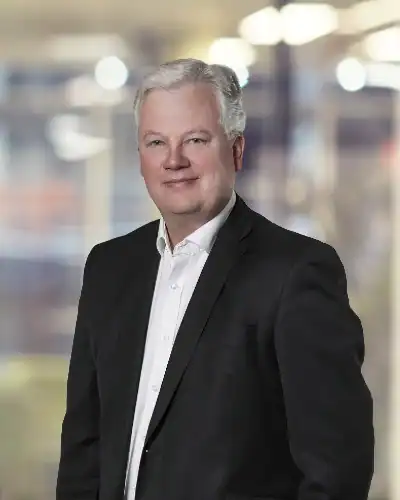
Patrick Lawless
Executive Chair, Gresham House Asset Management (Resources) Ireland Limited
Patrick Lawless
Executive Chair, Gresham House Asset Management (Resources) Ireland Limited
Patrick is Executive Chair of Gresham House in Ireland. He is also Chair of the Investment Committee in Gresham House Asset Management Ireland Ltd.
Patrick founded Gresham House Asset Management Ireland Ltd (formerly Appian Asset Management Ltd) in 2002 after completing the management buy-out of Aberdeen Asset Management Ireland Ltd. He has over thirty years’ investment experience in the fund management, stockbroking and private banking businesses. He has held leadership roles in Davy, Aberdeen Asset Management and ABN Amro.
A member of the Chartered Financial Analysts Institute, Patrick previously sat on the Boards of the Irish Association of Investment Managers (IAIM), Irish Forestry Unit Trust (IForUT) and North American Forestry Investment Trust (NAFIT).
Insights
Key Documents
Shareholder information
View or subscribe to the key shareholder information for this company.
Annual reports and accounts
Financial statements/reports
- Gresham House Unit Trust – Annual Report and Accounts – 30 September 2025
- Gresham House Unit Trust – Annual Report and Accounts – 30 September 2024
- Gresham House Unit Trust – Annual Report and Accounts – 30 September 2023
- Gresham House Unit Trust – Annual Report and Accounts – 30 September 2022
- Appian Unit Trusts – Annual Report and Accounts – 30 September 2021
- Appian Unit Trusts – Annual Report and Accounts- 30 September 2020
- Appian Unit Trusts – Annual Report and Accounts – 30 September 2019
Interim reports and accounts
Financial statements/reports
- Gresham House Unit Trust – Interim Report and Accounts – 31 March 2023
- Appian Unit Trusts – Interim Report and Accounts – 31 March 2022
- Appian Unit Trusts – Interim Report and Accounts – 31 March 2021
- Appian Unit Trusts – Interim Report and Accounts – 31 March 2020
- Appian Unit Trusts – Interim Report and Accounts – 31 March 2019
PRIIPS & Prospectus
SFDR disclosures
Supplementary Prospectus >>
Summary
The Gresham House Thematic Multi Asset Fund is managed through a top-down asset allocation framework which involves the formation of a house view on financial markets that drives the asset allocation. Individual asset allocation decisions are based on bottom-up fundamental analysis and application of a sustainable investment process.
The fund promotes environmental and social characteristics by investing at least 70% of its value in “sustainable assets” (excluding cash, cash equivalents and government bonds), as well as not investing in companies which do not adhere to global norms on environmental protection, human rights, labour standards and anti-corruption, and excluding companies which have significant involvement in certain industries. “Sustainable assets” are defined as those which meet the fund’s sustainable thematic alignment and exclusion criteria. Thematic alignment will be determined by the percentage revenue, or equivalent metric relevant to the business model, which demonstrates contribution to a sustainable theme. Investments must demonstrate that more than 20% of revenue, or equivalent metric, contributes to a sustainable theme to be included in the fund. The fund will report on the percentage of holdings aligned to each theme on a periodic basis.
In order to ensure the securities in the fund adhere to global norms and do not invest in excluded industries, an external ESG data provider is employed to monitor the portfolio. The internal investment team is responsible for compiling a sustainable investment thesis for each asset. The thesis includes a summary of findings from the ESG Decision Tool, employed to assess material ESG risks and opportunities, and an assessment of the thematic alignment of the underlying security.
No sustainable investment objective
This financial product promotes environmental or social characteristics but does not have as its objective a sustainable investment.
Environmental or social characteristics
The fund promotes environmental and social characteristics by investing at least 70% of its value in sustainable assets (excluding cash, cash equivalents and government bonds). “Sustainable assets” are defined as those which align to sustainable themes, including but not limited to Climate & Energy, Waste, Circular Economy and Food & Agriculture, and meet the fund’s exclusion criteria restricting investment in certain activities. The fund will also not invest in companies which do not adhere to global norms on environmental protection, human rights, labour standards and anticorruption.
Investment strategy
The Gresham House Thematic Multi Asset Fund seeks to achieve long-term capital appreciation with moderate risk exposure by investing on a diversified basis in transferable securities, such as equity securities and debt securities, and in collective investment schemes. The Fund may invest across asset classes, sectors, geographies, and market capitalisations without limitation save in respect of the restriction on investment that do not meet the fund’s thematic and exclusion criteria described below.
The Gresham House Thematic Multi Asset Fund is managed through a top-down asset allocation framework which involves the formation of a house view on financial markets that drives the asset allocation. Individual asset selection decisions are based on bottom-up fundamental analysis, including a consideration of valuation and business quality, as well as alignment to sustainable themes and adherence to exclusion criteria.
Exclusion criteria
All investments must pass a screening process carried out by a third-party data provider to ensure they meet the fund’s exclusionary criteria. Exclusionary criteria are twofold:
First, the fund precludes investment in companies which do not adhere to global norms on environment protection, human rights, labour standards and anti-corruption. Global norms include:
- OECD Guidelines for Multinational Enterprises
- ILO Tripartite Declaration of Principles concerning Multinational Enterprises and Social Policy
- UN Global Compact
- Guiding Principles on Business and Human Rights
The third-party data provider will produce a red flag for investments considered to violate these Norms. Investments receiving a red flag cannot be invested in or will be sold within three months if already invested.
Secondly, the fund excludes investments with significant involvement in certain industries and activities. The industries or activities and exclusion thresholds are listed below:
- Military Equipment Services and Production >10% revenue
- Gambling >10% revenue
- Pornography > 5% revenue
- Tobacco > 10% revenue
- Nuclear Power >10% revenue
- Abortifacients – any involvement in Production, Distribution, Services
- Abortion Services/Planned Parenthood – any involvement
- Contraceptives – any involvement in Production, Distribution, Services
- Stem Cell Research – any involvement
- Alcohol Production – > 10% Revenue
- Fossil Fuels Production and/or Exploration >10% Revenue
Any investment that is determined by the third-party data provider to breach the thresholds will be sold from the portfolio within three months.
Thematic alignment
For all new investments made by the fund (except for cash or cash equivalents, or sovereign bonds), a company note including an investment and sustainability thesis must be produced prior to investment. This includes an analysis of the thematic alignment of the security and includes detail such as the theme targeted and a description of how the asset aligns to the theme.
All investments made by the fund must also be assessed using the ESG Decision Tool (“the Tool”) prior to investment. This tool is used to assess material sustainability risks and opportunities to the investment case and to identify any areas to be monitored and addressed through engagement and/or voting, as and when relevant, through the holding period. A summary of material findings from the Tool will be included in the company note.
Good governance
Good governance is assessed through application of the Tool which prompts an assessment of sustainability risks and opportunities to the investment case under the headings noted below:
- Board structure, composition and protocols
- Board skills and engagement, including in ESG risk
- Delivering change and success
- Anti-competitive behaviour
- Anti-bribery & corruption
- Ethical risk profiling and management
It is also considered that the exclusion of investments in breach of global norms contributes to the avoidance of investments that do not demonstrate good governance.
Sovereign bonds
Investment in sovereign bonds does not apply the fund’s exclusion or thematic alignment criteria. Investments in sovereign bonds that are intended to be held for more than 12 months (i.e. those that are not considered cash or cash equivalents) will be required to have a prime ESG rating (B- or above), as defined by a third party ESG data provider.
Proportion of investments
The fund invests across a variety of asset classes including equities, cash, bonds, property and alternative assets such as infrastructure and forestry. The fund will invest at least 70% of fund value in assets (excluding cash, cash equivalents and government bonds) that promote environmental and social characteristics as determined by their alignment to sustainable themes and compliance with the fund’s exclusion criteria.
Up to 30% of the fund asset value is classified as “other”. This mainly consists of investments in cash and/or bonds. This allocation is necessary from an asset allocation perspective
The fund does not intend to make any sustainable investments.
Monitoring or environmental or social characteristics.
1. Continuous monitoring is carried by an external ESG data provider to ensure investments are not in breach of global norms in relation to environmental protection, human rights, labour standards and anti-corruption and to ensure that investments continue to meet exclusionary criteria.
2. Meetings with representatives of investments will be carried out regularly by the Gresham House Ireland Investment Team in order to:
- Assess the underlying investment thesis including alignment to sustainable themes
- Monitor any ESG specific risks identified
- Assess additional ESG risks
- Encourage improvements in ESG shortcomings
3. The Fund is overseen by the Gresham House Ireland Investment Committee on a regular basis who provide oversight of the fund’s adherence to the investment process detailed above.
Methodologies
To ensure an alignment of investments to sustainable themes, a sustainable investment thesis is compiled by the Investment Team which includes an analysis of thematic alignment as well as an assessment of ESG risks. The assessment of thematic alignment is based on bottom-up fundamental research.
An external provider is employed to ensure the global norms, exclusionary criteria and country ESG ratings of the fund are met. Please see here links to the:
- Methodology applied to assess adherence to global norms
- Methodology applied to determine revenue associated with exclusion criteria
- Methodology applied to assess country ESG rating
Data sources and processing
An external provider, currently ISS (institutional shareholder Services), is employed to provide data relating to compliance with global norms, breach of exclusion criteria, principal adverse impact indicators and country ESG ratings.
Internal analysis of all investments is conducted by the Gresham House Ireland Investment Team to determine thematic alignment. This is based on publicly available information and includes a review of documents including annual reports and sustainable investment reports, or equivalent.
Limitations to methodologies and data
Data relating to exclusions and global norms violations is provided by third party providers. The Manager is dependent on the external provider to provide accurate data. This data is also dependent on companies disclosing relevant data and accurate data.
The subjective nature of ESG data and sustainability topics means that third parties may not agree with the Investment Team or external provider in relation to thematic alignment or global norms violations.
Not all investments of the fund are covered by the third-party data provider. In circumstances where the investment is not covered, the Investment Team will endeavour, to an extent which is fair and reasonable, to follow the investment process laid out above using publicly available information. The Investment Team may also aim to improve on gaps in data by engaging with investments to encourage improved disclosure of required information.
Due diligence
To assess ESG risks associated with an investment, an internal ESG tool is applied by the investment team. In order to ascertain the sustainability characteristics of the underlying assets, a sustainability investment thesis is compiled by the investment team.
The Gresham house Ireland Investment Committee provides oversight of the fund’s investment process. The Sustainable Investment Team also carries an annual audit to assess adherence of the Investment Team to sustainable investment related commitments including the completion of ESG Decision Tools.
Engagement policies
Engagement is part of the Manager’s sustainable investment approach, as detailed in the Engagement & Voting Policy. The Investment Team will engage with non-cash and non-government securities. The purpose of engagement can vary but includes to:
- Monitor any ESG risks identified, including controversies
- Encourage improvements in ESG shortcomings to enhance value of investments
- Assess alignment with fund themes and alignment thresholds
- Encourage greater disclosure of ESG-related information
In addition, the fund will vote all resolutions where possible. Voting for holdings in the fund are undertaken by ISS based on the ISS Sustainability Policy guidelines.
Designated reference benchmark
The fund does not designate a reference benchmark.
Want to keep up to date?
Subscribe using the form below to receive regular updates on Gresham House Global Thematic Multi-Asset Fund.
"*" indicates required fields