
The insight
Infrastructure sits within most allocations, but capital within energy infrastructure has concentrated on renewable generation. Battery energy storage systems (BESS) give institutional investors access to a return driver that differs fundamentally from renewable generation, earning from volatility, scarcity and flexibility rather than from output. For an allocator seeking flexibility as a distinct exposure, a dedicated BESS allocation provides the broader opportunity set.
Four structural drivers
- Renewables are creating the problem storage solves
- Electricity demand is entering a structural up-cycle
- The grid is the bottleneck and BESS helps relieve it
- Costs have collapsed, and the returns are now attractive
How batteries earn: revenue stacking
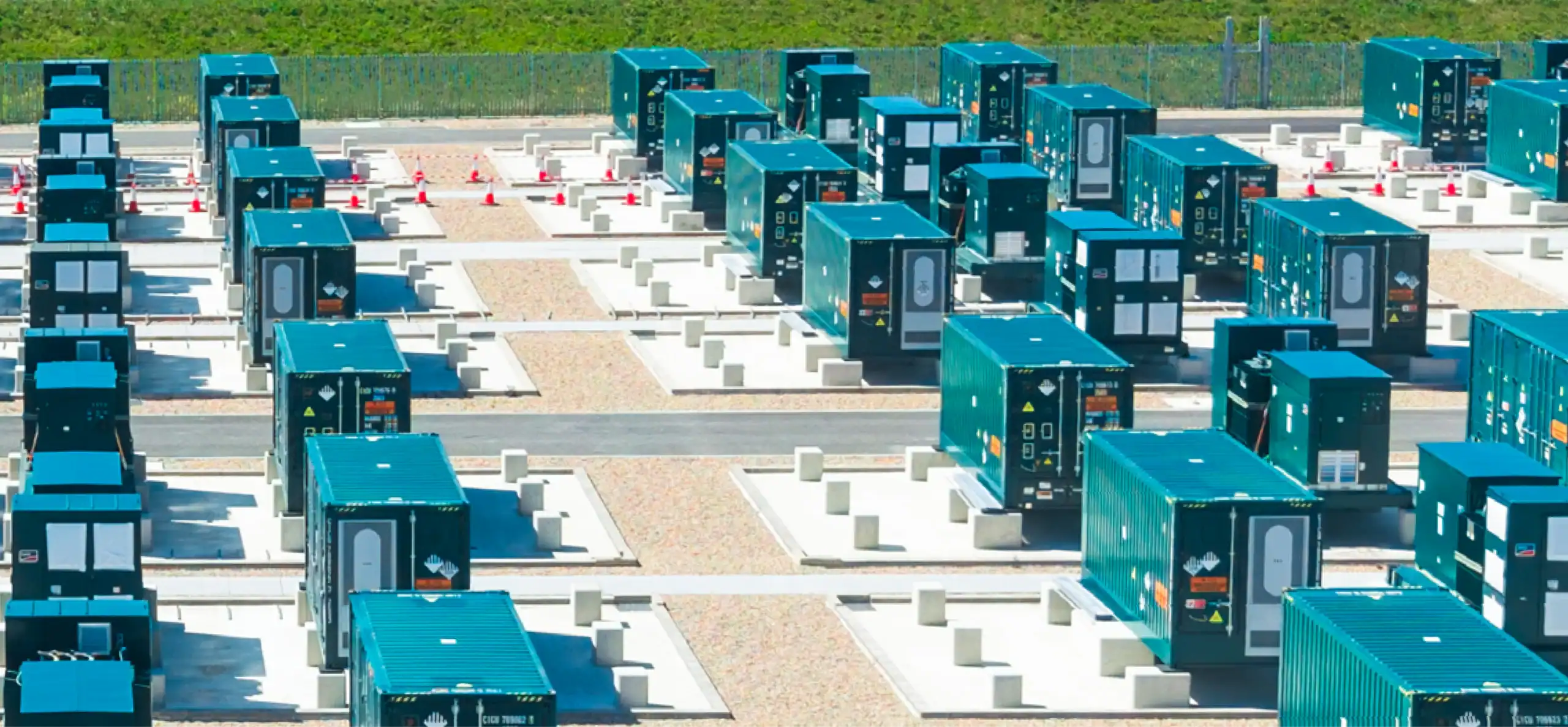
A battery energy storage system (BESS) is a grid-connected facility that stores electricity and releases it on demand.
A battery does not rely on a single revenue source. It “stacks” income across several complementary pools, performing market-based operations to whichever market is most valuable at any moment – the discipline that turns grid volatility into bankable cash flow.
The benefits of a dedicated allocation
There are two fundamentally different approaches for deploying capital into BESS. Renewable asset owners may add storage to improve the economics and resilience of assets they already own.
This is a defensive capital-allocation decision constrained by the location, connection and operating profile of the existing portfolio.
A dedicated BESS allocation, however, takes a different approach: it treats flexibility as an investment opportunity in its own right and deploys capital across the broader market opportunity set, including standalone and co-located assets according to where the most attractive risk-adjusted return can be achieved.
Complementary to existing renewable investments
Renewable generation assets are increasingly price-takers: as wind and solar penetration rises, they earn less for the power they produce, because they all produce at the same time.
BESS are price-responsive and can monetise the volatility, negative-price events, evening ramps and balancing needs that erode generation returns.
The result is a genuinely complementary, often counter-cyclical, exposure: when renewable revenues compress, storage revenues typically expand.
For an allocator with a large renewables portfolio, storage is therefore not just another infrastructure line. It can provide a partial economic hedge against capture-price pressure exposure, adding a differentiated return driver.
The full paper provides a detailed comparison of the two approaches, covering strategic intent, opportunity set, siting, revenue optimisation and portfolio construction.