
Gresham House Energy Storage Fund plc (GRID)
Notice: GRID announces launch of a Formal Sale Process.
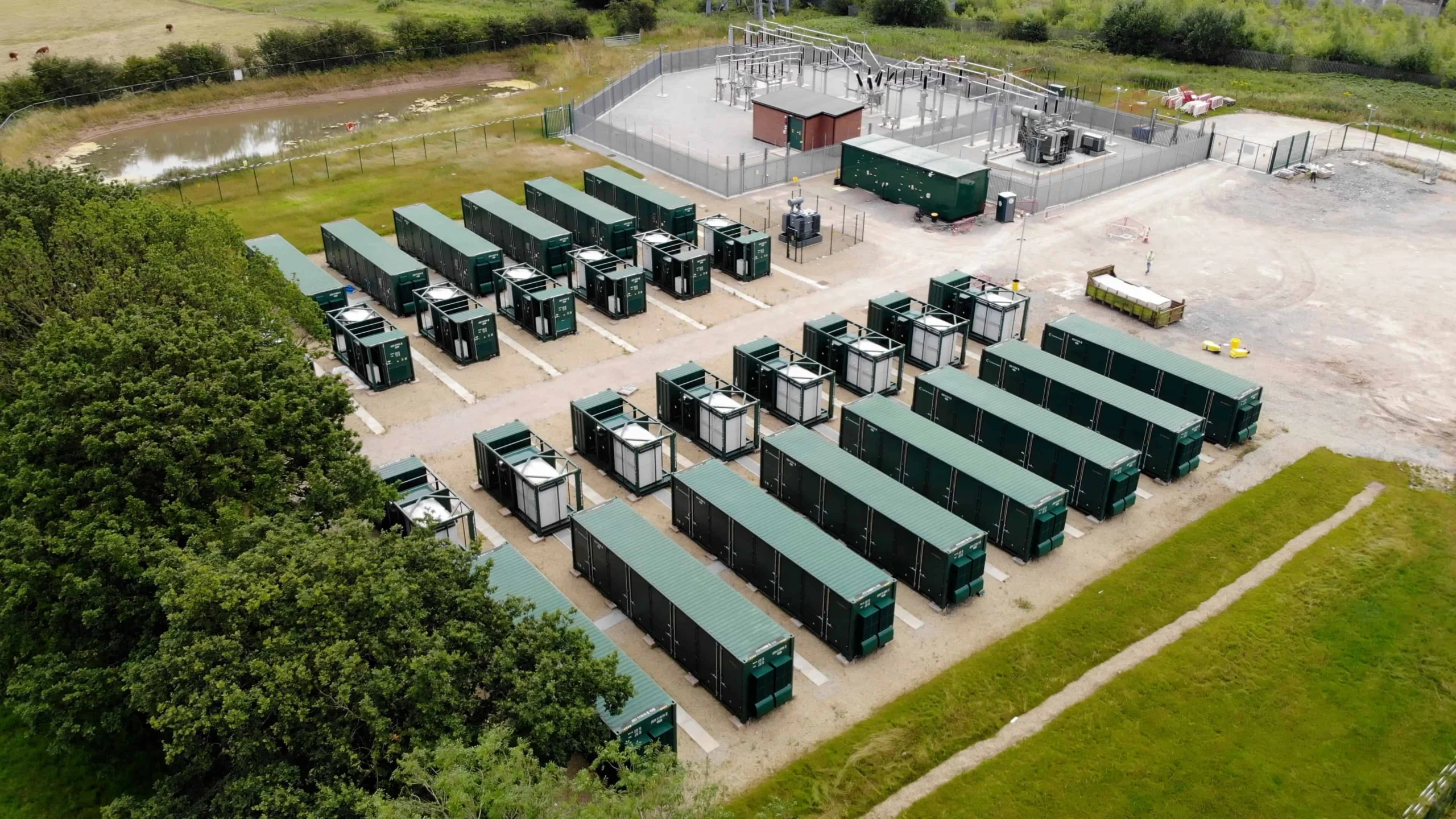
A diversified portfolio of operational utility-scale BESS projects
Each project can generate multiple revenue streams to allow GRID to deliver on its return objectives. GRID seeks to achieve this through:
- Trading: asset-backed buying and selling of power in wholesale markets and system operator balancing mechanisms.
- Ancillary services: mainly Frequency Response, providing a rapid response to small supply-demand imbalances that keeps the grid’s frequency stable.
- Capacity market: a mechanism whereby batteries enter into long-term contractual arrangements to provide capacity to the system when there is the greatest need. This stream is increasingly supplemented by floor and tolling agreements, providing contracted downside mitigation.
- Alternative revenues: a strategy launched in 2026 after successful live trials, capturing longer-term contracted supply-demand imbalances, and designed to be additive and inversely correlated to GRID’s existing trading strategy.
The UK’s largest listed BESS fund
Gresham House Energy Storage Fund plc (LSE: GRID) is the UK’s largest fund investing in utility-scale battery energy storage systems (BESS), the vital technology that helps Britain use more of the clean power it generates, cutting waste and keeping a lid on energy bills.
As the established market leader in the UK, GRID operates a portfolio of over 1GW of BESS projects, and is delivering a growth plan that would more than double this capacity, backed by international capital partners.
GRID’s scale brings real commercial advantages: more competitive terms with suppliers and offtakers, access to international capital partners on attractive terms, and a diversified portfolio that reduces reliance on any single site, technology or revenue stream.
Why invest in battery energy storage?
The UK’s electricity system is shifting decisively away from fossil fuels towards renewables, and batteries are an essential part of this shift, storing electricity when it is abundant and releasing it when the system needs it, keeping the system balanced and running smoothly.
Results and webinars
How to invest
The fund is listed on the Specialist Fund Segment (SFS) of the London Stock Exchange and can be accessed using the ticker GRID. Due to its SFS listing, some platforms may not list the fund or will require interested investors to self-elect as a professional investor in order to be able to invest.
Please contact the team at info@greshamhouse.com for more information.
Key risks
The value of the Fund and the income from it is not guaranteed and may fall as well as rise. As your capital is at risk you may get back less than you originally invested.
Past performance is not a reliable indicator of future performance
Team
Board

John Leggate
Non-Executive Chair, Gresham House Energy Storage Fund plc Board
John Leggate
Non-Executive Chair, Gresham House Energy Storage Fund plc Board
John is a highly experienced international executive in the energy sector and an investor and advisor in renewable energy and digital technology, bringing a wealth of expertise in running and growing major energy businesses to GRID. In his early career, John worked in civil nuclear power generation and held a number of senior roles at BP, focusing on the North Sea and Azerbaijan. Latterly at BP, he held a range of corporate-level executive roles, including Group Chief Information Officer.
He was also responsible for group-wide physical and cyber security and led the development of corporate digital transformation investment activity. John is currently a senior advisor to global blue-chip consultants specialising in energy and digitisation, a partner with donedeal (Monaco) – a boutique financial advisory and M&A house – and is on the board of cyber security firm Global Integrity. John also serves on the Enterprise Committee of the Royal Academy of Engineering.
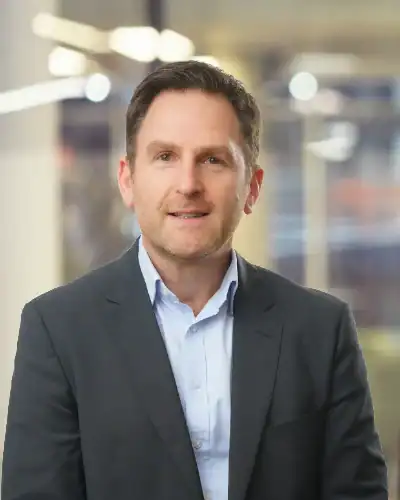
Andy Koss
Non-Executive Director, Gresham House Energy Storage Fund plc Board
Andy Koss
Non-Executive Director, Gresham House Energy Storage Fund plc Board
Andy is a Chartered Accountant and Corporate Treasurer with 20 years’ operational and financial leadership in the listed energy sector, having served as CEO Generation at Drax Group plc, a FTSE 250 company, and CEO, UK and Middle East, for Sembcorp Industries, which is listed on the Singapore Exchange.
He brings end-to-end expertise in battery storage, connectivity and government engagement, underpinned by deep sector relationships with NESO, Ofgem and UK Government.
Andy is a director of Encyclis and has recently become Chair of the Board of Trustees for a children’s charity, PANS PANDAS UK.

Isabel Liu
Non-Executive Director, Gresham House Energy Storage Fund plc Board
Isabel Liu
Non-Executive Director, Gresham House Energy Storage Fund plc Board
Isabel brings an international investor’s perspective to GRID, having spent her career investing equity in infrastructure worldwide, including billion-dollar private funds for AIG in Asia, ABN AMRO in Europe and pension schemes in the UK. She has served as a non-executive representing transport users across the UK and at Heathrow Airport.
Isabel also brings further experience in listed fund governance to the Board, serving a director of Schroder Oriental Income Fund Limited and Utilico Emerging Markets Trust plc. Fluent in Mandarin Chinese, Isabel has an MBA from the University of Chicago Booth School of Business, a Master in Public Policy from Harvard Kennedy School, and a BA in economics from the Ohio State University. She has worked in the US, Hong Kong, and for the last 20 years in London.
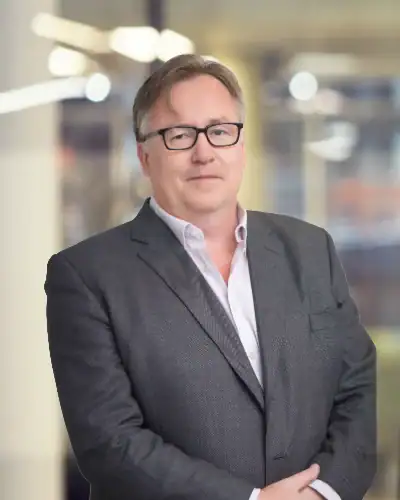
Duncan Neale
Non-Executive Director and Audit Committee Chair, Gresham House Energy Storage Fund plc Board
Duncan Neale
Non-Executive Director and Audit Committee Chair, Gresham House Energy Storage Fund plc Board
Duncan brings over 20 years of public and private financing experience in the renewable energy space to the Board. He is a Chief Financial Officer and Finance Director and a Fellow of the Institute of Chartered Accountants, having qualified with PwC in London. Duncan was part of the senior management team that turned Corona Energy from a gas trading business into the largest independent supplier of gas to UK businesses and has also served as CFO of an M&A team bidding for thermal power stations. Duncan’s role as a non-executive director and the Chair of the Audit Committee of Atrato Onsite Energy plc provides further financial governance and reporting expertise in the listed investment trust space.
Recently he spent several years as Finance Director of Belltown Power, a renewable energy site operator (hydro, solar and wind) holding a portfolio of 215 MW. He is a Trustee of Cambodian Children’s Fund UK.

Cathy Pitt
Non-Executive Director, Gresham House Energy Storage Fund plc Board
Cathy Pitt
Non-Executive Director, Gresham House Energy Storage Fund plc Board
Cathy brings over 20 years of specialist legal experience in the investment company sector, including fund structuring and fundraising for domestic and international vehicles as a Partner at CMS, a top global law firm. Prior to this, she worked in the asset management practice of another top global law firm for almost 20 years, including eight as a Partner.
As a member of the Regulatory and Governance Committees of LPeC, the industry association for listed private capital funds, and the Law Society Company Law Committee, she brings exceptional knowledge of regulatory developments affecting listed private capital funds, directly informing the Board’s compliance and governance processes.
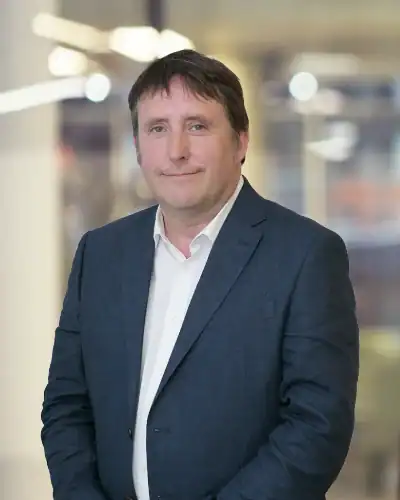
David Stevenson
Senior Independent Director, Gresham House Energy Storage Fund plc Board
David Stevenson
Senior Independent Director, Gresham House Energy Storage Fund plc Board
David’s standing as a financial journalist and commentator for the Financial Times, Citywire and MoneyWeek, together with his role as Executive Director of altfi.com, gives the Board an informed external perspective on capital markets and alternative finance trends relevant to the fund’s investor base. He has gained further listed investment company governance expertise as a Non-Executive Director on the SQN Secured Income Investment Trust and the Aurora Investment Trust.
David is also the author of a number of books, including a bestseller on ETFs and their use within portfolios in Europe for the FT. He was a Director at The Rocket Science Group and before that a Senior Producer in business and science for BBC TV.
Investment team
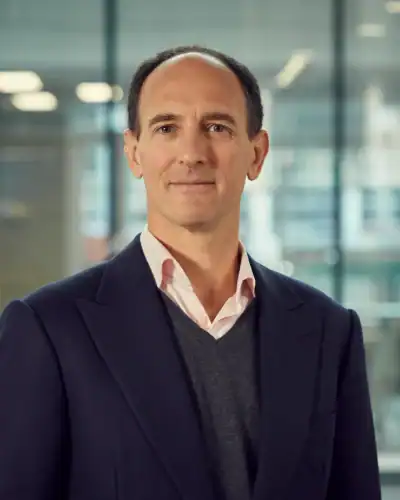
Ben Guest
Managing Director, Energy Transition
Ben Guest
Managing Director, Energy Transition
Ben has been Managing Director and Head of the Gresham House Energy Transition division since November 2017.
He is the Fund Manager of Gresham House Energy Storage Fund plc and was, through 2020, also Fund Manager for the British Strategic Investment Fund (BSIF) strategy which grew AUM to £350mn under his leadership.
Ben started his fund management career at Lazard Asset Management in 1994 and worked there for nine years. He later founded Hazel Capital in April 2007, serving as Managing Partner and CIO and which became Gresham House Energy Transition on the acquisition of Hazel Capital’s business activities in November 2017.
Prior to founding Hazel Capital, he was a co-founder of Cantillon Capital, where he managed a US$1bn equity hedge fund focused on global technology, media and telecom.
Ben currently serves as a director of over 50, mostly project, companies.
He has 27 years of investment experience and holds a BEng in Mechanical Engineering from Imperial College.
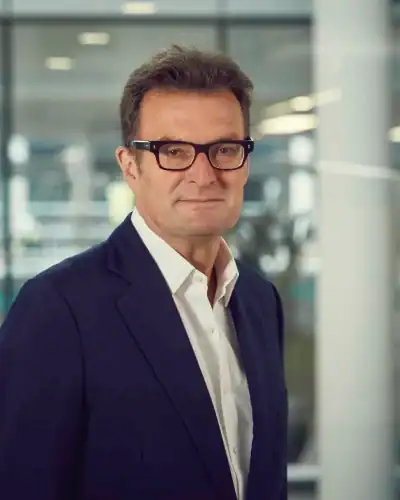
Rupert Robinson
Managing Director, Gresham House
Rupert Robinson
Managing Director, Gresham House
Rupert has been the Managing Director of Gresham House Asset Management Ltd since September 2015. He is a member of the Group Management and Investment Committees.
Rupert has a proven track record of delivering significant value to shareholders and has over 32 years’ experience in asset management, private banking and wealth management, focusing on product innovation, investment management, business development, banking and wealth structuring.
Before joining Gresham House, Rupert was CEO and CIO of Schroders (UK) Private Bank for 11 years, and spent 17 years at Rothschild, where latterly he was Head of Private Clients for Rothschild Asset Management.
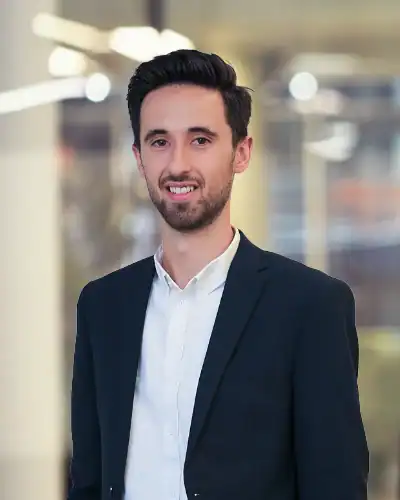
James Bustin
Associate Director, Energy Transition
James Bustin
Associate Director, Energy Transition
James is an Associate Director at Gresham House. James moved to the Energy Transition team in 2019 after joining Gresham House in 2018 as part of Gresham House Ventures, having previously been at Livingbridge since 2016.
James is the Assistant Fund Manager for Gresham House Energy Storage Fund plc.
He is an experienced financial modeller and investment professional and his current role covers a broad range of work across fund management and new investments, primarily focused on energy storage and renewables. Prior to joining the Energy Transition team, he worked as an Analyst covering mostly early-stage companies in the Venture Capital and Equity Fund vehicles as part of Gresham House Ventures. This role provided experience with investment decisions across a variety of markets as well as exposure to growth companies and management of quoted investment vehicles.
His career started in TMT audit at EY where he spent three years and qualified as a chartered accountant.
James holds a first-class Master’s degree in Mathematics from Durham University.

Nick Vest
Finance Director, Energy Storage
Nick Vest
Finance Director, Energy Storage
Nick joined Gresham House in January 2021. He has over 20 years’ accounting and finance experience, having qualified as a Chartered Accountant in 2000.
Prior to Gresham House, Nick worked as Finance Director for an internationally focused property investment group and before that was Associate Director of Tax at Temenos Group SA in Switzerland.
Nick holds a BA (Hons) in History with Information Technology from the University of Exeter and is a Chartered Accountant and Chartered Tax Advisor.
Insights
Key documents
Shareholder information
View or subscribe to the key shareholder information for GRID at the below links.
For shareholder queries, please contact:
Peel Hunt
E: Investor.relations@peelhunt.com
T: (0)20 7418 8900
Jefferies
W: https://www.jefferies.com
T: 0370 703 0157
RNS Announcements
Corporate alerts
Share price
Share price
Share price calculator
Annual reports and accounts
Financial statements/reports
Interim reports and accounts
Prospectus
- Gresham House Energy Storage Fund plc – Supplementary Prospectus April 2023
- Gresham House Energy Storage Fund plc – Prospectus May 2022
- Gresham House Energy Storage Fund plc – Registration document May 2022
- Gresham House Energy Storage Fund plc – Summary document May 2022
- Gresham House Energy Storage Fund plc – Securities Note May 2022
- Gresham House Energy Storage Fund plc – Share Issuance Programme
- Gresham House Energy Storage Fund plc – Summary document
- Gresham House Energy Storage Fund plc – Securities Note
- Gresham House Energy Storage Fund plc – Registration document
Investor Disclosure Document
Company information disclosure
Investment policy
Introduction
The Company invests in a diversified portfolio of utility-scale energy storage systems, which utilise batteries. The BESS Projects comprising the Portfolio will be located in diverse locations across Great Britain and the Overseas Jurisdictions.
Individual BESS Projects will be held within special purpose vehicles into which the Company invests through equity and / or debt instruments. It is intended that each BESS Project Company will hold one BESS Project, but an BESS Project Company may own more than one BESS Project. The Company will typically seek legal and operational control through direct or indirect stakes of up to 100%. In such BESS Project Companies, but may participate in joint ventures or co-investments, including, without limitation with other investors or entities managed, operated or advised by the Gresham House Group, where this approach enables the Company to gain exposure to assets within the Company’s investment policy. In such circumstances, the Company will seek to secure its shareholder rights through protective provisions in shareholders’ agreements, co-investment agreements and other transactional documents.
Asset type and diversification
The Company invests primarily in BESS Projects using lithium-ion battery technology, as such technology is considered by the Company to offer the best risk / return profile. However, the Company is adaptable as to which energy storage technology is used by its projects, so long as they meet investment objectives and policy. It may invest in projects with alternative battery technologies such as those derived from sodium or zinc, or other forms of energy storage technology, such as flow batteries / machines and compressed air.
The Company intends to invest with a view to holding assets until the end of their useful life. BESS Projects may also be disposed of, or otherwise realised, where the Manager determines in its discretion that such realisation is in the interests of the Company. Such circumstances may include (without limitation) disposals for the purposes of realising or preserving value, or of realising cash resources for reinvestment or otherwise.
BESS Projects will be selected with a view to achieving appropriate diversification in respect of the Portfolio.
First, diversification will be sought by geographical location of the BESS Projects in which the Company invests across Great Britain and the Overseas Jurisdictions, provided that no more than 30% of Gross Asset Value (calculated at the time of investment) may be invested in the Overseas Jurisdictions.
Second, it is the Company’s intention that at the point at which any new investment is made, no single project (or interest in any project) will have an acquisition price (or, if an additional interest in an existing investment is being acquired, the combined value of the Company’s existing investment and the additional interest acquired shall not be) greater than 20% of Gross Asset Value (calculated at the time of investment). However, in order to retain flexibility, the Company will be permitted to invest in a single project (or interest in a project) that has an acquisition price of up to a maximum of 30% of Gross Asset Value (calculated at the time of acquisition). The Company will also target a diversified exposure with the aim of holding interests in not less than five separate projects at any one time..
Third, the Company intends to achieve diversification by securing multiple and varied revenue sources across the Portfolio by investing in BESS Projects which can benefit from a number of different income streams with different contract lengths and return profiles. The Company intends that the BESS Projects in which it invests will primarily generate revenue from in-front-of-meter services but may also provide behind-the-meter services. The Company may invest in changes to its equipment, technical configurations and technology in order to access revenue streams as they become available, noting that revenue streams and revenue stacking continues to evolve, not only in Great Britain but also in the Overseas Jurisdictions, as the energy storage market matures.
BESS BESS Projects in which the Company invests may diversify their revenue sources further by collaborating with renewable generators or large users of power in close proximity to an BESS Project, or providing availability-based services to restore electric power stations or part of electric grids to operation. The Company may also invest in BESS Projects with Co-Location Arrangements in the Overseas Jurisdictions and may purchase solar panels for use at such co-located BESS Projects in the Overseas Jurisdictions, provided that the proportion of an investment spent on purchases of solar panels does not exceed 6% of Gross Asset Value (calculated at the time of such purchase).
Fourth, the Company aims to achieve diversification across the Portfolio through the use of a range of third-party providers, such as developers, EPC contractors, battery manufacturers and landlords.
Finally, each BESS Project internally mitigates operational risk because each BESS Project will contain a battery system with a number of battery modules in each stack, each of which is independent and can be repaired, upgraded or replaced separately, thereby reducing the impact on the project as a whole of the failure of one or more battery modules.
Other investment restrictions
The Company will generally acquire BESS Projects where construction is substantially complete and where BESS Projects are capable of commercial operations (“Operational Projects”). Operational Projects will need to have in place sufficient land rights, either in the form of a freehold interest or substantially similar interest in the Overseas Jurisdictions or a completed lease on satisfactory terms in relation to the land where that BESS Project is situated, a grid connection agreement or grid sharing or such other rights to import or export from the relevant network as are market standard and completion of relevant commissioning tests confirming commissioning completion.
The Company may also acquire BESS Projects or rights to acquire BESS Projects which are considered “shovel ready” that as a minimum have in place sufficient land rights either in the form of a freehold interest or substantially similar interest in the Overseas Jurisdictions, or a completed lease, lease option, or agreement for lease, on satisfactory terms in relation to the land where that BESS Project is situated, full planning permission enabling the construction of a suitable BESS Project on that land, and a grid connection offer or grid sharing or such other rights to import or export from the relevant network as are market standard, prior to connection works being completed (Ready to Build Projects).
The Company may invest in Ready to Build Projects provided that no more than 10% of Gross Asset Value (calculated at the time consideration is paid for such acquisition) may be exposed in aggregate to such Ready to Build Projects. If the Company wishes to acquire other Ready to Build Projects in excess of the 10% of Gross Asset Value restriction, it may acquire such Ready to Build Projects for a nominal upfront consideration
provided that: (i) any remaining consideration is paid by the Company only where construction is substantially complete and where such BESS Projects are capable of commercial operations; and (ii) the Company has a put option to transfer back the Ready to Build Project to the seller in certain circumstances.
The Company may provide loan finance to BESS Project Companies before they hold Operational Projects so that the BESS Project Companies can acquire equipment or make payments in connection with the BESS Projects’ construction or delivery, provided that no more than 25% of Gross Asset Value (calculated at the time that finance is provided based on the latest available valuations) may be exposed in aggregate to any such loans.
Once an Operational Project is acquired, or after a Ready to Build Project becomes an Operational Project, the Company may invest in upgrades by loans or otherwise and enter into new lease arrangements to increase the size of the site, new planning permissions enabling construction of an increased capacity BESS Project on that land, a new and / or amended grid connection which provides for increased capacity or altered technical parameters, and / or an EPC contract, EPCm contract suite or other construction contracts to undertake construction of the relevant upgrades.
The Company does not intend to invest in listed closed-ended investment funds or in any other investment fund (other than, potentially, in money market funds as cash equivalents) and in any event shall not invest any more than 15% of its total assets in listed closed-ended investment funds or in any other investment fund.
Investment in developers
The Company may invest in one or more Developers of BESS Projects through equity issued by the relevant Developer, provided that investment in Developers (calculated at the time of investment) shall be capped at £1mn in aggregate.
Cash management
Uninvested cash or surplus capital may be invested on a temporary basis in:
- cash or cash equivalents, money market instruments, money market funds, bonds, commercial paper or other debt obligations with banks or other counterparties having a ‘‘single A’’ or higher credit rating as determined by any internationally recognised rating agency selected by the Board which, may or may not be registered in the European Union; and
- any UK ‘‘Government and public securities’’ as defined for the purposes of the FCA Rules.
Leverage and derivatives
The Company may raise debt and introduce leverage (at the Company level and / or the level of one or more of its subsidiaries, such leverage to be introduced directly or through one or more subsidiaries) to the extent that funding is available on acceptable terms. In addition, it may from time to time use borrowing for short-term liquidity purposes, which could be achieved through a loan facility or other types of collateralised borrowing instruments. The Group is permitted to provide security to lenders in order to borrow money, which may be by way of mortgages, charges or other security interests or by way of outright transfer of title to the Group’s assets. The Directors will restrict borrowing to an amount not exceeding 50% of the Company’s Net Asset Value at the time of drawdown. There will be no cross-collateralisation between the BESS Projects.
Derivatives may be used for currency, interest rate and power price hedging purposes as set out below and for efficient portfolio management. However, the Directors do not anticipate that extensive use of derivatives will be necessary.
Efficient portfolio management
Efficient portfolio management techniques may be employed by the Group, and this may include (as relevant) currency hedging, interest rate hedging and power price hedging.
Amendment to and compliance with investment policy
No material change will be made to the investment policy without the approval of shareholders by ordinary resolution.
In the event of any material breach of the investment restrictions applicable to the Company, shareholders will be informed of the actions to be taken by the Manager through a Regulatory Information Service.
Sustainable Finance Disclosures Regulation (SFDR)
No consideration of adverse impacts of investment decisions on sustainability factors
The Manager has elected to exercise its discretion under Article 4(1)(b) of SFDR not to commit to considering the adverse impacts of investment decisions of the Company on sustainability factors in the manner specifically contemplated by Article 4(1)(a) of the SFDR but will continue to consider and manage these impacts in line with its Sustainable Investment Policy.
The manner in which sustainability risks are integrated into the investment decisions of Gresham House Asset Management Limited (the “Manager”) in relation to the Company
As detailed in the Energy Transition Sustainable Investment Policy, specific to the Manager’s investment division, the Manager integrates ESG (“sustainability”) risks and opportunities into the investment process.
The Manager integrates sustainability risks and opportunities through the completion of the ESG Decision Tool prior to investment. The Tool supports the identification of potential material ESG risks that need to be managed and mitigated during the investment period of the asset. The Tool also determines if there are any reasons why the asset may not be invested in at this stage for ESG reasons.
Post-investment, material sustainability risks identified through the ESG Decision Tool or as part of the division’s assessment of material sustainability risks to its assets, are monitored and managed on an ongoing basis. The Manager will also monitor ESG related data, where available, to support the ongoing management of sustainability risks for assets.
The likely impacts of sustainability risks on the returns of the Company
The Manager has determined that the sustainability risk (being the risk that the value of the Company could be materially negatively impacted by an environmental, social or governance event or condition) faced by the Company is low to medium.
The Manager has put in place processes and checks to minimise ESG-related risks associated with the manufacturing and sourcing of the components used in energy storage plants, as well as the construction and operation of these plants.
Sustainability-related disclosures
Publication date: 23 December 2022
Environmental and social characteristics
The Company is committed to investing in and increasing battery energy storage system (BESS) capacity to support the decarbonisation and electrification of energy systems. Battery energy storage systems (BESS) play an essential role in supporting the decarbonisation of energy systems and consequently the broader economy. The Company, in this way, aims to contribute positively to climate change mitigation and net zero strategies.
The Manager will assess adherence to the characteristic through measuring and monitoring:
- total operational battery energy storage capacity (megawatts (MW) and megawatt hours (MWh))
- total battery energy storage capacity under construction (megawatts (MW) and megawatt hours (MWh))
The Manager also intends to measure, monitor, and report on carbon emissions avoided (tCO2e) as a result of the operation of BESS and increase in BESS capacity. The Manager is in the process of finalising a robust methodology to estimate the carbon emissions avoided through the increased adoption of BESS in energy systems.
Summary
The Company is committed to investing in and increasing battery energy storage system (BESS) capacity to support the decarbonisation and electrification of energy systems. Battery energy storage systems (BESS) play an essential role in supporting the decarbonisation of energy systems and consequently the broader economy. The Company, in this way, aims to contribute positively to climate change mitigation and net zero policies.
The Company promotes environmental or social characteristics but does not have sustainable investment as its objective.
As detailed in the Gresham House Energy Transition Sustainable Investment Policy, the Manager integrates sustainability risks and opportunities into the pre-investment process for all assets through the completion of the ESG Decision Tool prior to investment. Post-investment, material sustainability risks identified through the ESG Decision Tool or as part of the division’s assessment of material sustainability risks are monitored and managed on an ongoing basis.
In line with the Company’s focus on supporting decarbonisation of the economy, the Manager will consider any climate-related risks and opportunities within the acquisition and construction phase and aim to mitigate or minimise risks.
At least 96% of the Company’s investments are aligned with the environmental and/or social characteristics of the Company. The Company does not commit to making sustainable investments as defined under the SFDR.
The Manager will measure and monitor the MWs and MWhs of operational BESS capacity and BESS capacity under construction on a regular basis. This is a central objective and outcome of the Company and remains core focus for the Manager.
MW and MWh operational and in-construction capacities are taken from the as built site diagrams and connection agreements, with in-construction assets driven from the site specifications as approved within the EPC agreement.
The parent entity of the Manager has a dedicated Sustainable Investment Team. This team provides support in relation to the evolution of processes around sustainable investing applied by the Manager. The Sustainable Investment Team carries out annual auditing of ESG processes to ensure they meet the sustainability-related commitments of the Manager. This includes an assessment of ESG metrics, ESG Decision Tools and investment processes.
As detailed in the Gresham House Energy Transition Sustainable Investment Policy, the Manager commits to engaging with relevant stakeholders as part of its ongoing investment and management of BESS assets. Engagement is focused to maximise the efficient operation of BESS that help balance the UK electricity grid, allowing it to make optimal use of intermittent renewable energy generation in the UK electricity generation system.
The fund does not designate a reference benchmark.
No sustainable investment objective
The Company promotes environmental or social characteristics but does not have sustainable investment as its objective.
Environmental or social characteristics promoted by the Company
The Company is committed to investing in and increasing battery energy storage system (BESS) capacity to support the decarbonisation and electrification of energy systems.
Battery energy storage systems (BESS) play an essential role in supporting the decarbonisation of energy systems and consequently the broader economy.
The Company, in this way, aims to contribute positively to climate change mitigation and net zero policies.
Investment strategy
The Company seeks to provide investors with an attractive and sustainable dividend over the long term by investing in a diversified portfolio of utility scale energy storage systems, which utilise batteries, located in Great Britain, and the Overseas Jurisdictions.
The Company aims to do this through the construction, development, acquisition, management, and operation of battery energy storage system (BESS). BESS assets are managed to provide several integral functions to energy systems that will enable the decarbonisation of the grid through increased renewable energy generation and generate varied revenue streams.
Functions include “Trading”, providing “Balancing Mechanisms” to the grid, and “Ancillary Services” (such as ” Frequency Response”, which maintains electrical stability by responding to deviation in frequency flowing through a network).
As detailed in the Gresham House Energy Transition Sustainable Investment Policy, the Manager integrates sustainability risks and opportunities into the pre-investment process for all assets through the completion of the ESG Decision Tool prior to investment. Post-investment, material sustainability risks identified through the ESG Decision Tool or as part of the division’s assessment of material sustainability risks are monitored and managed on an ongoing basis. In line with the Company’s focus on supporting decarbonisation of the economy, the Manager will consider any climate-related risks and opportunities within the acquisition and construction phase and aim to mitigate or minimise risks.
The Company invests in individual battery energy storage projects. All projects are companies that sit within special purpose vehicles invested in by the Company. Projects may either be operational or under construction at time of acquisition. Due diligence is carried out prior to acquisition for all projects. As noted above, this includes completion of the ESG Decision Tool to assess potential sustainability risks and opportunities. In addition, all projects will be assessed to ensure the project compliance to all relevant legal and regulatory requirements. The projects do not have management structures, employees, or tax policies in the way “investee companies”, as understood by the SFDR, might have.
Proportion of investments
At least 96% of the Company’s investments are aligned with the environmental and/or social characteristics of the Company. The Company does not commit to making sustainable investments as defined under the SFDR.
“Other” category investments include a legacy asset that uses mostly gas engine technology to provide power to the grid although does have a small amount of BESS (used as primary energy source before gas takes over) and a small amount Diesel generator capacity (primarily used as back up for Capacity Market Obligations). Under the investment policy, only energy storage systems (primarily BESS assets) will be invested in and as such the Company will not invest in equivalent assets going forward.
Monitoring of environmental or social characteristics
The Manager will measure and monitor the MWs and MWhs of operational BESS capacity and BESS capacity under construction on a regular basis. This is a central objective and outcome of the Company and remains core focus for the Manager.
The Manager is working to develop a credible carbon avoided methodology and will monitor this as a key metric to measure the attainment of the environmental characteristic to support climate change mitigation through the Company’s contribution to the decarbonisation of the energy system over time. The Manager is seeking input from a third-party carbon consultant to support the development of this methodology and the parent entity’s Sustainable Investment Team will also provide oversight.
Methodologies
MW and MWh operational and in-construction capacities are taken from the as built site diagrams and connection agreements, with in-construction assets driven from the site specifications as approved within the EPC agreement.
The methodology for carbon emissions avoided is currently under development and will be made available once ready.
Data sources and processing
MW and MWh operational and in-construction capacities are taken from the as built site diagrams and connection agreements, with in-construction assets driven from the site specifications as approved within the EPC agreement.
This disclosure will be updated when the Company adopts new metrics to assess carbon emissions avoided.
Limitations to methodologies and data
This disclosure will be updated when the Company adopts new metrics to assess carbon emissions avoided.
Due diligence
The Manager integrates sustainability risks and opportunities through the completion of the ESG Decision Tool prior to investment. The Tool supports the identification of potential, material ESG risks that need to be managed and mitigated during the investment period of the asset. The Tool also determines if there are any reasons why the asset may not be invested in at this stage for ESG reasons.
Post-investment, material sustainability risks identified through the ESG Decision Tool or as part of the division’s assessment of material sustainability risks to its wind, solar and battery energy storage system (BESS) assets, are monitored and managed on an ongoing basis. The Manager will also monitor ESG related data, where available, to support the ongoing management of sustainability risks for assets.
The parent entity of the Manager has a dedicated Sustainable Investment Team. This team provides support in relation to the evolution of processes around sustainable investing applied by the Manager. The Sustainable Investment Team carries out annual auditing of ESG processes to ensure they meet the sustainability-related commitments of the Manager. This includes an assessment of ESG metrics, ESG Decision Tools and investment processes.
Engagement policies
As detailed in the Gresham House Energy Transition Sustainable Investment Policy, the Manager commits to engaging with relevant stakeholders as part of its ongoing investment and management of BESS assets. Relevant stakeholders include developers, landowners, planning authorities, contractors and equipment suppliers during the development and contracting/procurement/construction process, as well as investors.
During the operational phase of the project, the Manager will engage with several stakeholders including local communities, insurers, operations & maintenance contractors, asset optimisers, the Environment Agency, and local fire services. Engagement is focused to maximise the efficient operation of BESS that help balance the UK electricity grid, allowing it to make optimal use of intermittent renewable energy generation in the UK electricity generation system.
Designated reference benchmark
The fund does not designate a reference benchmark.
Adviser and corporate information
| Manager and AIFM: Gresham House Asset Management Limited | Corporate Broker and Financial Adviser: Jefferies International Limited |
|---|---|
| 5 New Street Square London EC4A 3TW | 100 Bishopsgate London EC2N 4JL |
| Administrator and Company Secretary: JTC (UK) Limited | Auditor: BDO LLP |
| 18th Floor The Scalpel, 52 Lime Street London EC3M 7AF | 55 Baker Street London W1U 7EU |
| Depositary: INDOS Financial Limited | Registrars and Receiving Agent: Computershare Investor Services Plc |
| 54 Fenchurch Street London EC3M 3JY | The Pavilions Bridgwater Road Bristol |
Other important company documents

Connect with our team
Whether you would like to explore our investment strategies, discuss your objectives or learn more about Gresham House, our team is here to help.